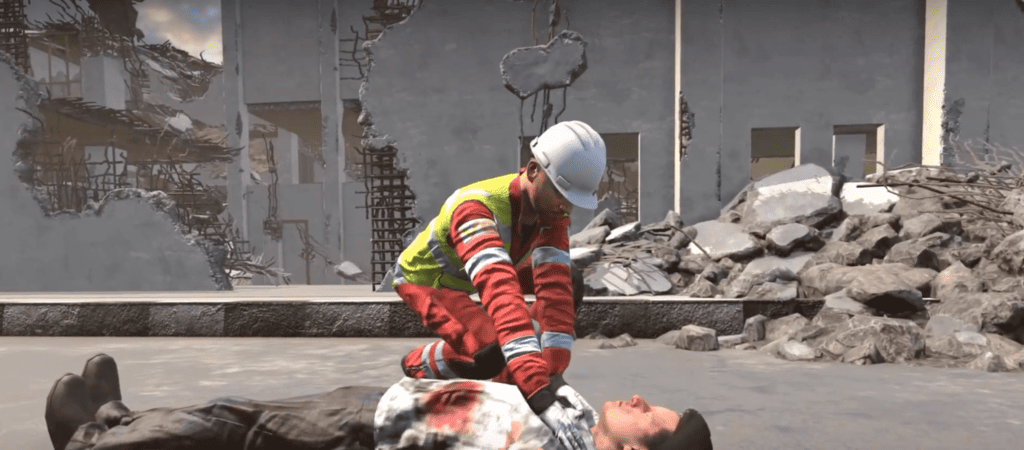
In a cardiac arrest, survival isn’t about “effort”—it’s about the mechanical quality of chest compressions and those first few critical seconds. Traditional first aid training, while well-intentioned, usually fails to replicate the raw, visceral pressure of a real medical crisis. VGLANT’s First Aid VR module changes that. We move beyond simple “classroom knowledge” and force a transition into high-stakes technical proficiency using immersive, high-fidelity simulation.
The Biology of Resuscitation
The VGLANT CPR Basics module is hard-coded to follow global medical protocols. It’s not a game; it’s a biological enforcement tool. The simulation demands strict adherence to the parameters that actually save lives:
- The 30:2 Rhythm: You drill the 30 compressions to 2 breaths ratio until it becomes a baseline reflex.
- Forceful Depth: Training the body to hit that 5cm mark consistently. Anything less fails to oxygenate the brain.
- The 100-120 BPM Cadence: Maintaining the relentless tempo required to keep blood moving.
The Haptic Bridge: Where VR Meets Muscle
Where most VR “safety games” fall apart is the lack of physical feedback. VGLANT separates itself by syncing high-fidelity VR sensors with physical medical manikins. This isn’t just a visual exercise; it’s a haptic feedback loop.
- Real-Time Calibration: Trainees get immediate visual or auditory alerts the second their rhythm slips or their depth shallows out.
- Physical Conditioning: By pushing against a physical manikin, users build the actual muscular “feel” needed for the field.
- Killing the Panic Response: We drop users into high-pressure industrial sites and public offices. This is stress inoculation. It teaches you to function when your heart is racing and the environment is chaotic.
Data as the Ultimate Auditor
Safety isn’t about guessing; it’s about verification. The VGLANT Administrator Dashboard converts every movement into Tracked Data Records. This gives HSE managers a forensic look at readiness:
- Compression Uniformity: Was that 5cm depth maintained for the full ten minutes, or did the trainee fatigue?
- Rhythmic Accuracy: Did the trainee stay on beat when the simulation introduced distractions?
- The Readiness Score: An objective metric that proves an individual is technically prepared for a real deployment.
The Bottom Line
At VGLANT, we focus on the human outcome of a crisis. By utilizing safe-to-fail environments and real-time telemetry, we ensure your first aid team is actually ready to act. We take the theory out of the manual and turn it into the decisive, mechanical actions that keep people alive.