The term “digital twin” is used widely in mining, but it is not always used the same way. Some vendors apply it to any 3D model of a mine site. Others reserve it for systems that receive live operational data. This article explains what a mining digital twin is, which components it usually contains and how mining companies use it.
A Working Definition
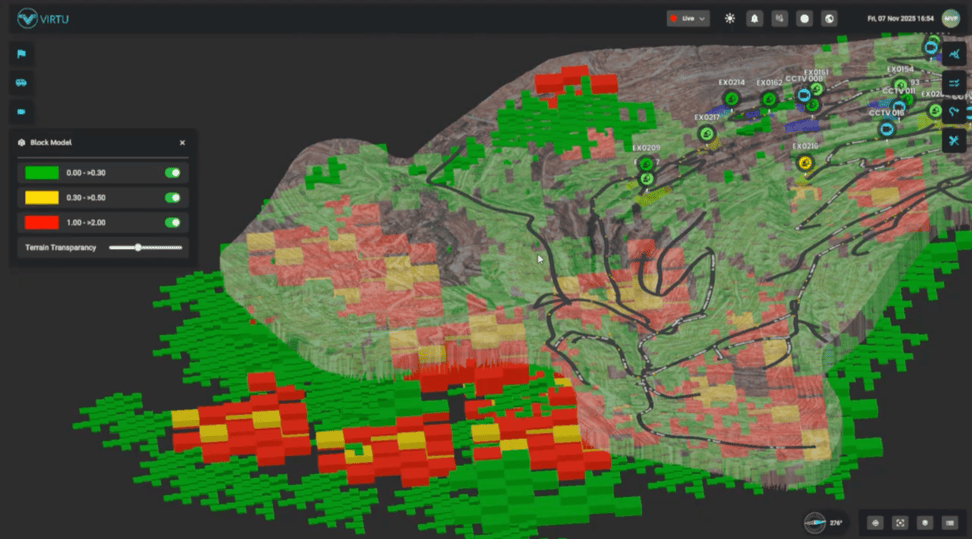
A digital twin is a virtual replica of a physical object, system or process that is kept up to date with data from its real counterpart. Virtu describes a digital twin as a live replica that uses real-time data and simulations. It is not a static model. It shows the current state of an asset, keeps a history of past states and supports monitoring, analysis and prediction.
In mining, the “physical counterpart” is usually a mine site or part of one: the pit, the haul roads, the waste dumps, the stockpiles and the equipment working on them.
Digital Twin vs 3D Model
A 3D model of a mine shows the shape of the site at the moment it was surveyed. It is useful for planning and presentations, but it becomes outdated as soon as excavation continues.
A digital twin differs in three ways:
- It is updated as new survey data and operational data arrive.
- It links the terrain to what is happening on it, such as equipment positions and status.
- It stores past states, so the operation can be reviewed over time.
Core Data Layers
Most mining digital twins combine several layers of data in a single view.
Terrain layer. This represents the shape of the site. It is commonly built from drone photogrammetry or LiDAR surveys, which produce point clouds that are processed into surface models. Because the pit changes every day, the terrain layer has to be refreshed at regular intervals.
Equipment layer. This shows the position and status of mobile equipment such as haul trucks, excavators, dozers and graders. In many operations, this data comes from a Fleet Management System (FMS), which records GPS location and operating status for each unit.
Infrastructure layer. Fixed assets such as roads, ramps, crushers, conveyors, workshops and offices can be added so that equipment activity is shown in context.
Operational data layer. Production figures, cycle times, delays and other indicators can be linked to the relevant locations or units.
Historical layer. Stored records allow users to replay past periods and compare conditions over time.
How Virtu Approaches It
Virtu, an Indonesian immersive technology company, has delivered a Smart Digital Twin Mining project for Petrosea, a coal mining company. According to Virtu’s project page, the system uses drone LiDAR to create a detailed virtual map of the mining infrastructure and overlays it with data from Petrosea’s Fleet Management System. Users can see the location, route and operating status of vehicles in one view. The project is available on web, mobile and mixed reality platforms.
Virtu also lists PAMA and JIEP among its digital twin clients.
Common Uses in Mining
Mining companies use digital twins for several purposes:
- Situational awareness. Supervisors and command centres can see the whole operation in one place instead of switching between separate systems.
- Haul road management. Virtu’s digital twin page describes colour-coding average road speed in green, yellow or red to highlight possible safety concerns, and observing truck movement to identify congestion.
- Planning. A current 3D topographic view supports short-term planning better than a flat map.
- Review and audit. Timestamped playback allows teams to examine what happened during a specific shift or event.
- Maintenance planning. Equipment data can be used to schedule maintenance before failures occur.
What a Digital Twin Requires
A digital twin is only as accurate as the data it receives. Before starting a project, a mining company should check:
- how often the site is surveyed and in what format
- whether the FMS or other systems can provide data through an integration
- who will maintain the twin as the site changes
- which users need access and on which devices
Summary
A mining digital twin combines terrain, equipment and operational data into a single, regularly updated view of the site. Its value depends on reliable data sources and clear use cases. Companies interested in a mining digital twin can contact Virtu to discuss their site and data.